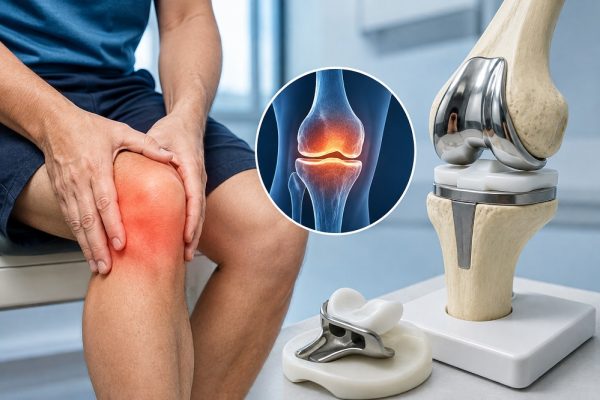
Knee pain can start as mild discomfort when you climb stairs, walk, or get up from a chair. Over time, the pain can become more intense and interfere with everyday activities. When medicines, exercise, physiotherapy, and other treatments no longer provide enough relief, an orthopaedic specialist may recommend knee replacement surgery.
Total Knee Replacement Surgery in Delhi can help people with severe knee damage reduce pain and improve mobility. However, doctors do not recommend surgery for every person with knee pain. They consider the condition of the knee, symptoms, mobility, overall health, and response to other treatments before suggesting surgery.
What Is Knee Replacement Surgery?
Knee replacement surgery replaces damaged parts of the knee joint with artificial components. During total knee replacement, the surgeon removes damaged bone and cartilage and places specially designed implants in the joint.
The procedure aims to reduce pain, improve movement, and help patients return to their daily activities.
Doctors may recommend Total Knee Replacement Surgery in Delhi when severe knee damage affects your quality of life and other treatments no longer provide sufficient relief.
When Do You Need Knee Replacement Surgery?
Knee replacement does not depend on age alone. Your symptoms and the condition of your knee play a much more important role.
1. You Have Severe and Persistent Knee Pain
Persistent knee pain can make simple activities difficult. You may struggle to walk, climb stairs, stand for long periods, or get up from a chair.
If pain continues despite medicines, physiotherapy, exercise, or other recommended treatments, your orthopaedic doctor may discuss Total Knee Replacement Surgery in Delhi as a treatment option.
2. You Have Advanced Osteoarthritis
Osteoarthritis gradually damages the cartilage that cushions the knee joint. As cartilage wears away, the bones can rub against each other and cause pain, stiffness, swelling, and reduced movement.
When arthritis becomes severe and significantly affects your daily life, knee replacement may help reduce pain and improve your ability to move.
3. Knee Pain Limits Your Daily Activities
Severe knee problems can affect almost every part of your routine. You may find it difficult to:
- Climb or descend stairs
- Walk for moderate distances
- Stand for long periods
- Get in and out of a chair
- Complete household tasks
- Participate in hobbies
- Enjoy suitable physical activities
When knee pain consistently limits your routine, consult an orthopaedic specialist. People looking for Best Knee Replacement Surgery in Dwarka should choose a specialist who carefully evaluates their condition before recommending surgery.
4. Other Treatments No Longer Provide Relief
Doctors usually explore non-surgical treatments before recommending knee replacement. Depending on your condition, these treatments may include:
- Physical therapy
- Weight management
- Pain-relief medicines
- Activity modification
- Walking aids
- Injections in selected cases
If these approaches fail to control your symptoms and knee damage continues to affect your daily life, your doctor may recommend Total Knee Replacement Surgery in Delhi.
5. Your Knee Has Severe Stiffness
Severe knee stiffness can restrict your movement and make everyday tasks frustrating. You may struggle to bend or straighten your knee fully.
When stiffness occurs alongside advanced joint damage and persistent pain, your orthopaedic specialist may consider knee replacement after a detailed evaluation.
What Are the Benefits of Knee Replacement Surgery?
Knee replacement can offer several benefits for suitable patients, including:
- Reduced knee pain
- Improved mobility
- Better knee function
- Greater independence
- Easier performance of daily activities
- Improved quality of life
Your recovery and results depend on factors such as your overall health, knee condition, rehabilitation, and commitment to your recovery plan.
What Happens Before Knee Replacement Surgery?
Your orthopaedic doctor will review your symptoms, medical history, and activity levels before recommending surgery. The doctor may perform a physical examination and order imaging tests such as X-rays to understand the condition of your knee.
Your doctor will also discuss previous treatments and your expectations from surgery.
If surgery appears suitable, your healthcare team will explain the procedure, potential risks, recovery timeline, and rehabilitation process. A consultation for Best Knee Replacement Surgery in Dwarka should include a detailed evaluation rather than rely only on the intensity of your pain.
What Is Recovery Like After Knee Replacement?
Recovery varies from person to person. Most patients begin moving the knee soon after surgery with guidance from their healthcare team and physiotherapist.
Your rehabilitation program may focus on:
- Improving knee strength
- Increasing flexibility
- Restoring joint movement
- Improving balance
- Building walking confidence
- Returning to everyday activities
Follow your rehabilitation plan carefully and attend your scheduled follow-up appointments. Your doctor will also guide you about wound care, medicines, physical activity, and other aspects of recovery.
Is Knee Replacement Right for Everyone?
No. Knee replacement involves major surgery, so doctors recommend it only when the expected benefits outweigh the potential risks.
Mild or moderate knee pain does not automatically mean you need surgery. Many people can manage their symptoms with medicines, exercise, physiotherapy, lifestyle changes, or other non-surgical treatments.
If you experience ongoing pain or reduced mobility, consult an orthopaedic specialist instead of deciding on surgery based only on online information. A proper examination can help determine whether Total Knee Replacement Surgery in Delhi suits your condition.
How Can You Prepare for Knee Replacement Surgery?
If your doctor recommends surgery, proper preparation can support your recovery. Your healthcare team may advise you to:
- Maintain a healthy weight
- Strengthen the muscles around your knee
- Perform recommended exercises
- Discuss your current medicines with your doctor
- Arrange help at home during the early recovery period
- Keep frequently used items within easy reach
- Create a safe space for walking at home
- Follow all pre-surgery instructions
Good preparation can make the early recovery period easier and safer.
How Do You Choose the Right Orthopaedic Specialist?
The right orthopaedic specialist can help you understand whether surgery represents the best option for your condition. Look for a doctor who evaluates your knee thoroughly, explains both surgical and non-surgical options, discusses potential risks, and answers your questions clearly.
If you are searching for Best Knee Replacement Surgery in Dwarka, consider the surgeon’s experience, hospital facilities, rehabilitation support, and approach to patient care.
Patients considering Total Knee Replacement Surgery in Delhi should also seek a personalized evaluation instead of choosing surgery based solely on location or online reviews.
Final Thoughts
Knee replacement surgery can help people with advanced joint damage, persistent pain, and significant mobility problems. However, doctors do not recommend the procedure simply because you experience knee pain.
If your pain continues despite appropriate treatment, limits your daily activities, or results from advanced joint damage, speak with an orthopaedic specialist. A thorough evaluation can help determine whether Total Knee Replacement Surgery in Delhi or another treatment option suits your needs.
Patients searching for Best Knee Replacement Surgery in Dwarka should focus on qualified orthopaedic care, an individualized treatment plan, appropriate surgical expertise, and proper rehabilitation support.